If you’ve ever dreamed of standing at the edge of an ancient rainforest, watching bald eagles drift above a harbor packed with fishing boats and cruise ships, then Ketchikan, Alaska, belongs on your list. Known as Alaska’s “First City” because it is the first major port travelers reach when entering the state from the south, Ketchikan delivers an experience that is raw, authentic, and unlike anything in the Lower 48.
This guide covers everything you need to know from when to visit and what to do to how to eat, get around, and make the most of your time in one of Southeast Alaska’s most beloved destinations.
Where Is Ketchikan, Alaska?
Ketchikan sits on Revillagigedo Island in the Alexander Archipelago, tucked into the southeastern corner of Alaska along the Inside Passage. The city stretches along a narrow strip of land between the Tongass Narrows and steep, forested mountains, which means there are no roads connecting Ketchikan to the rest of Alaska. You arrive by ferry or floatplane, and that remoteness is part of the appeal.
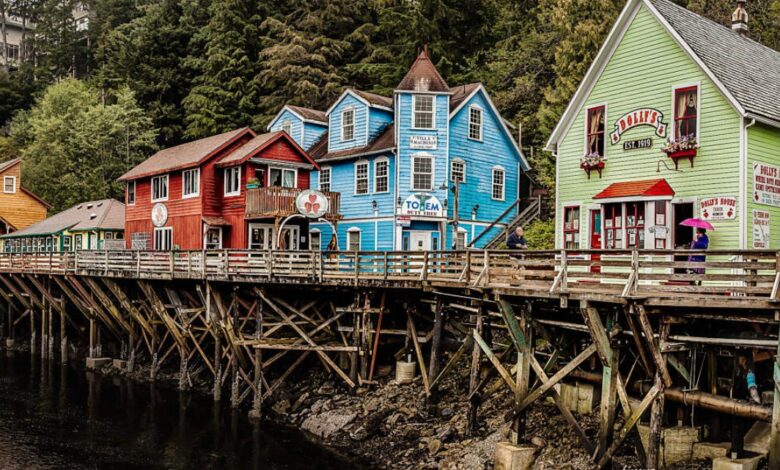
The town itself is compact and very walkable. It’s famous Creek Street, a row of wooden boardwalk buildings built over Ketchikan Creek, which served as the city’s red-light district during the gold rush era and now houses boutique shops, galleries, and a small museum. The history here is palpable, and the architecture tells it honestly.
When to Visit Ketchikan, Alaska
Ketchikan earns its reputation as one of the rainiest cities in the United States; the area receives roughly 150 inches of rainfall per year. That said, summer (late May through early September) is the best time to visit. Temperatures are mild, typically in the mid-50s to low 70s Fahrenheit, and daylight hours are long, giving you more time to explore.
Cruise season runs from May through September, and the harbor fills with ships daily during peak months. If you prefer a quieter visit with fewer crowds, aim for early June or late August, when the weather is still favorable, but the tourist pressure eases slightly.
Fall and winter in Ketchikan have their own character, fewer visitors, dramatic misty skies, and a chance to see the city living as it really does for most of the year. Wildlife activity remains strong year-round.
Top Things to Do in Ketchikan, Alaska
1. Explore Totem Poles and Indigenous Culture
Ketchikan holds the largest collection of standing totem poles in the world. The Saxman Native Village, located just two miles south of downtown, is a Tlingit community where you can watch master carvers at work and walk among towering totems that tell stories of lineage, history, and spiritual tradition. Totem Bight State Historical Park, north of the city, offers a quieter setting with restored poles and a replica clan house set along the water.
These sites are not tourist attractions in any shallow sense. They are living cultural spaces, and visiting them with respect and curiosity is the right way to experience them.
2. Misty Fjords National Monument
One of the most dramatic landscapes in all of Alaska, Misty Fjords National Monument begins just east of Ketchikan. Sheer granite cliffs rise thousands of feet above dark, still water. Waterfalls pour from the forest edge into the fjord below. You can reach Misty Fjords by floatplane or boat tour, both of which are readily available from the Ketchikan waterfront. A floatplane excursion that lands on a remote lake is a genuinely life-changing experience.
3. Fishing
Ketchikan is widely considered one of the finest sport fishing destinations in the world. The waters here are rich with five species of Pacific salmon, as well as halibut, rockfish, and Dungeness crab. Charter fishing boats depart daily from the harbor, and even novice anglers regularly catch their limit. If you only do one outdoor activity in Ketchikan, fishing makes a strong case for itself.
4. Hiking and Wildlife Watching
The Tongass National Forest, the largest national forest in the United States, surrounds Ketchikan. Trails range from easy boardwalk walks through old-growth spruce and hemlock to more demanding ridge hikes with views across the Inside Passage. The Ward Lake Recreation Area is a popular starting point for families, while Deer Mountain Trail rewards hikers with panoramic views when the clouds cooperate.
Wildlife is everywhere. Black bears, Sitka black-tailed deer, river otters, harbor seals, and humpback whales are all part of the landscape here. Bald eagles are so common in Ketchikan that locals barely glance at them.
Where to Eat in Ketchikan
Ketchikan’s food scene punches well above its size. Seafood is the obvious foundation the locally caught salmon, halibut, and crab are exceptionally fresh. The Cape Fox Lodge, perched above downtown and accessible by funicular, offers fine dining with sweeping harbor views. Along the waterfront, you’ll find casual spots where fishermen stop in for chowder and coffee. If you want to eat well and simply, a bowl of chowder or a fresh fish taco from a local market is hard to beat.
Getting Around Ketchikan
Downtown Ketchikan is small enough to walk. Taxis and ride-shares handle the short distances between downtown, the ferry terminal, and neighborhoods like Saxman. Renting a car is an option for those who want to explore the island’s road network, though most of what visitors come to see is concentrated in a fairly tight area. The Alaska Marine Highway ferry connects Ketchikan to other Southeast Alaska communities and to Bellingham, Washington, making it possible to travel the Inside Passage by sea.
Why Ketchikan, Alaska, Is Worth the Journey
Ketchikan is not the most convenient place to reach. That is exactly what makes it special. The effort of getting there by air, by sea, or by floatplane filters the experience and returns you something genuine. This is a fishing town, a Tlingit cultural center, a rainforest gateway, and a piece of Alaska that has not been smoothed over for easy consumption.
Whether you spend two days here on a cruise stop or linger for a week exploring fjords and forests, Ketchikan, Alaska, rewards the traveler who arrives with curiosity and leaves with salmon fillets in the cooler and mud on their boots.